Live Wedding Music in 2027: Everything You Need to Know

Updated: Oct 15

Planning a wedding in 2027? Whether you're getting married in a château in Provence, a countryside estate in the Loire Valley or a beautiful villa overlooking the French Riviera, music will play an important part in how your wedding feels.
But choosing your wedding music involves more than putting together a playlist.
Should you book a live musician or a DJ? Is an acoustic guitarist enough for 150 guests? How many songs do you need for your ceremony? And what should you consider when hiring a musician for a destination wedding in France?
These are all questions worth exploring before making a decision.
As a professional singer and guitarist performing at weddings across France, I've learnt that the most successful musical moments aren't necessarily the most elaborate. Often, they're the ones that feel natural, suit their surroundings and allow everyone to enjoy the occasion.
If you're considering live wedding music in 2027, this guide will help you understand your options, plan the different parts of your celebration and make choices that genuinely reflect you as a couple.
When Should You Book Your Wedding Musician for 2027?

Ideally, start looking for your wedding musician 9 to 12 months before your wedding, particularly if you're planning a summer celebration or getting married on a Saturday.
This isn't a strict rule. Some musicians are available much closer to the date, and it's always worth enquiring even if your wedding is only a few months away.
However, there are good reasons to begin early.
Unlike larger entertainment companies, independent wedding musicians can generally only perform at one wedding at a time. Once a date is confirmed, their availability for another event that day may be limited.
This becomes particularly relevant for destination weddings in France, where travelling between venues can involve several hours, sometimes requiring an overnight stay.
What should you organise first?
Before contacting musicians, try to establish three things:
Your wedding date and venue. These are essential for checking availability and calculating travel arrangements.
The moments you'd like accompanied by live music. Ceremony, cocktail reception, dinner or perhaps the entire wedding weekend.
The atmosphere you're hoping to create. Relaxed and intimate, lively and celebratory, or a mixture of both.
You don't need a complete schedule or a finalized song list at this stage.
In fact, it's often better to speak with your musician before making too many decisions. An experienced performer can help you work out where live music will have the greatest impact.
My advice: If you've found a musician whose sound you genuinely connect with, enquire as soon as your venue and date are confirmed. The musical details can be developed together afterwards.
Live Music or DJ: Which Is Right for Your Wedding?
@carolemartinod.moments @lomai.photo
(photo on the left: @carolemartinod.moments - photo on the right: @lomai.photo)
Live music and a DJ serve different purposes, and choosing one doesn't necessarily mean giving up the other.
The most useful question isn't which is better, but what kind of experience you'd like to create at each stage of your wedding.
What live music brings to a wedding
There's something distinctive about hearing a song performed in front of you.
A familiar melody can take on a completely different character when played on an acoustic guitar. The tempo might become softer, the arrangement more intimate, or the vocals more expressive.
Live musicians can also respond naturally to what's happening around them.
During a drinks reception, for example, a guitarist might begin with gentle acoustic arrangements while guests arrive, then gradually introduce more rhythmic songs as conversations become livelier.
The music evolves with the atmosphere rather than following a completely fixed sequence.
For a wedding ceremony, live performance can offer another advantage: flexibility.
If the bridal entrance takes longer than expected, a musician can extend an instrumental passage rather than allowing a recording to finish at an awkward moment.
When a DJ makes more sense
A DJ is particularly well suited to the evening party, when guests want to dance to familiar recordings, enjoy a wide variety of musical styles and keep the energy going late into the night.
DJs can move quickly between genres and respond to the dance floor without the limitations of a live band's repertoire.
Why combining both can work beautifully
One practical arrangement is to have live acoustic music during the ceremony and cocktail reception, followed by a DJ for the evening party.
You benefit from the intimacy of live performance during the earlier parts of the day and the versatility of a DJ later on.
Neither needs to compete with the other.
The important thing is to choose music that suits the moment, rather than expecting one format to do everything.
If you're looking for a DJ in France, I can personally recommend Antoine from Creative Agence. He's one of the best DJs I've had the pleasure of working with, and someone I'd happily recommend for your wedding.
Which Moments of Your Wedding Deserve Live Music?

When couples first think about wedding entertainment, they often imagine the ceremony or the evening party.
But there are several other moments when live music can make a meaningful difference.
For destination weddings in France, where celebrations frequently extend across an entire weekend, it's worth considering the experience as a whole.
The welcome dinner
A welcome dinner is often the first opportunity for guests to spend time together, particularly when friends and family have travelled from different countries.
Live acoustic music can help establish a relaxed atmosphere without turning the evening into a concert.
A gentle repertoire during aperitifs, followed by discreet music around dinner, can work particularly well.
The objective is to bring people together while leaving plenty of space for conversation.
The wedding ceremony
This is arguably the most personal setting for live music.
From the arrival of guests to the couple's exit, music helps mark the different stages of the ceremony.
You don't necessarily need continuous performance. A handful of carefully chosen pieces can be enough.
The cocktail reception
The cocktail hour, or vin d'honneur in France, is one of my favourite moments for live acoustic music.
The formal part of the wedding is over, drinks are being served and guests are beginning to relax.
It's an opportunity to create a warm, welcoming atmosphere, with music that can gradually become more upbeat.
The wedding dinner
Music during dinner requires a little more consideration.
Depending on the room, guest numbers and schedule, a short live set between courses may work better than continuous performance.
Speeches, announcements and service should always take priority.
The following day's brunch
For a wedding weekend, a relaxed acoustic performance during brunch can provide a lovely final musical moment.
It doesn't need to be elaborate. Sometimes a few familiar songs in the background are all that's required.
The key is not to fill every available moment with music. A well-planned wedding has its own natural rhythm, and knowing when not to play is just as important as knowing when to begin.
How Do You Choose the Perfect Music for Your Wedding Ceremony?

Start by choosing songs that mean something to you, then consider how they will work within the structure of your ceremony.
It's easy to become overwhelmed by lists of popular wedding songs, but there's no requirement to choose something simply because it's traditionally associated with weddings.
A song you both love can be far more meaningful than an obvious romantic ballad.
How many songs do you need?
For a typical symbolic wedding ceremony, I would suggest considering music for these five moments:
Guest arrival: Around 15 to 30 minutes of gentle music as guests take their seats.
The processional: Music for the entrance of the wedding party and the couple.
A moment during the ceremony: Perhaps during a symbolic ritual, signing or exchange of rings, depending on the format.
The recessional: A celebratory song as the newly married couple leave together.
Guest departure: Optional music while guests make their way towards the cocktail reception.
Not every ceremony needs all five.
A civil ceremony in France, for example, may have different timing and musical possibilities from a symbolic ceremony held at a private venue.
Should you choose instrumental music or vocals?
Both can work beautifully.
Instrumental guitar is particularly effective when you want something understated, especially during guest arrival or moments when people are moving.
Vocals can bring an additional emotional dimension to a significant entrance or ceremony exit.
You can also combine them.
For example, instrumental acoustic guitar as guests arrive, a sung piece for the processional and something brighter for the recessional.
Think about the timing
This is a detail couples sometimes overlook.
A recorded song has a fixed duration. A live musician can adapt the arrangement to the actual length of an entrance.
If you have a long aisle, several bridesmaids or a procession involving family members, discuss the sequence with your musician beforehand.
They can plan the arrangement so the music reaches a natural conclusion when everyone is in position.
For a destination wedding, it's also worth coordinating with your celebrant and wedding planner to make sure everyone understands the cues. Looking for inspiration? I've put together a selection of songs worth considering in The Finest Songs for Your Wedding Ceremony.
What Kind of Live Music Works Best for a Wedding Cocktail Hour?

For most cocktail receptions, music that creates atmosphere without overwhelming conversation is a good starting point.
This is especially true for outdoor weddings in France, where guests might be enjoying drinks in a courtyard, garden, terrace or vineyard.
An acoustic wedding singer can provide a natural balance between entertainment and background music.
Begin gently, then build the energy
I generally think of a cocktail reception as having its own musical progression.
At the beginning, guests are greeting one another, finding drinks and settling into the space.
Softer acoustic arrangements often work well here.
As the reception develops, more rhythmic songs can bring energy without making the music intrusive.
Towards the end, depending on the atmosphere, the repertoire can become more upbeat.
It's not about following a rigid formula. It's about observing what's happening and adapting.
What genres work particularly well?
Acoustic arrangements can bring together several styles:
Folk and acoustic pop for a warm, natural atmosphere.
Soul and classic pop for familiar melodies and gentle rhythm.
Carefully rearranged rock songs for something more unexpected.
Upbeat acoustic covers when guests are ready for a livelier atmosphere.
A recognisable song played in a different style can often catch someone's attention without interrupting their conversation.
How long should the music last?
In France, wedding cocktail receptions often last longer than the traditional one-hour cocktail hour.
A performance lasting 90 minutes to two hours can work well, depending on the schedule.
For longer receptions, discuss breaks and the overall structure with your musician.
It's also important to consider the setting.
An acoustic guitar and voice can be ideal for an intimate courtyard reception, but a larger outdoor space may require additional sound equipment or a different speaker arrangement.
My advice: Don't choose your cocktail music based only on the number of guests. Consider the size and layout of the space, the atmosphere you're after and how you want people to interact. If you're planning a cocktail reception in France, I've shared a few more ideas in How to Craft an Unforgettable Cocktail Hour for Your Wedding in France.
Solo Musician, Acoustic Duo or Live Band: What Should You Choose?
The right format depends on three main things: the atmosphere, the venue and your wedding music budget.
Each option has its own advantages.
Solo acoustic musician
Best for: ceremonies, intimate receptions, welcome dinners and relaxed cocktail hours.
A solo singer-guitarist offers a simple, flexible format.
There's very little visual or logistical complexity, and the performance can feel particularly close to the guests.
With appropriate amplification, a solo musician can also perform for a sizeable gathering.
The number of guests alone doesn't determine whether a solo performance is suitable.
For couples who appreciate a natural, understated atmosphere, this can be an excellent choice.
Acoustic duo
Best for: cocktail receptions, lively welcome dinners and celebrations where you want a little more musical energy.
Adding a second musician introduces new possibilities.
A percussionist, for example, can bring rhythm and movement while preserving the acoustic character of the performance.
A second guitarist or another instrumentalist can add depth and different arrangements.
A duo is often a good middle ground between the intimacy of a solo performer and the fuller sound of a band.
Live band
Best for: evening entertainment, dancing and celebrations where music is intended to be a central attraction.
A band can create a much bigger musical presence, particularly for a dedicated party set.
However, it also requires more planning.
You'll need to consider stage space, electrical requirements, sound levels, setup time and the venue's restrictions.
A band may be wonderful for an evening celebration but unnecessarily complicated for a quiet ceremony.
Ultimately, choose the format that serves the experience you want to create, rather than assuming that more musicians automatically means a better performance.
Can You Request Your Favorite Songs?
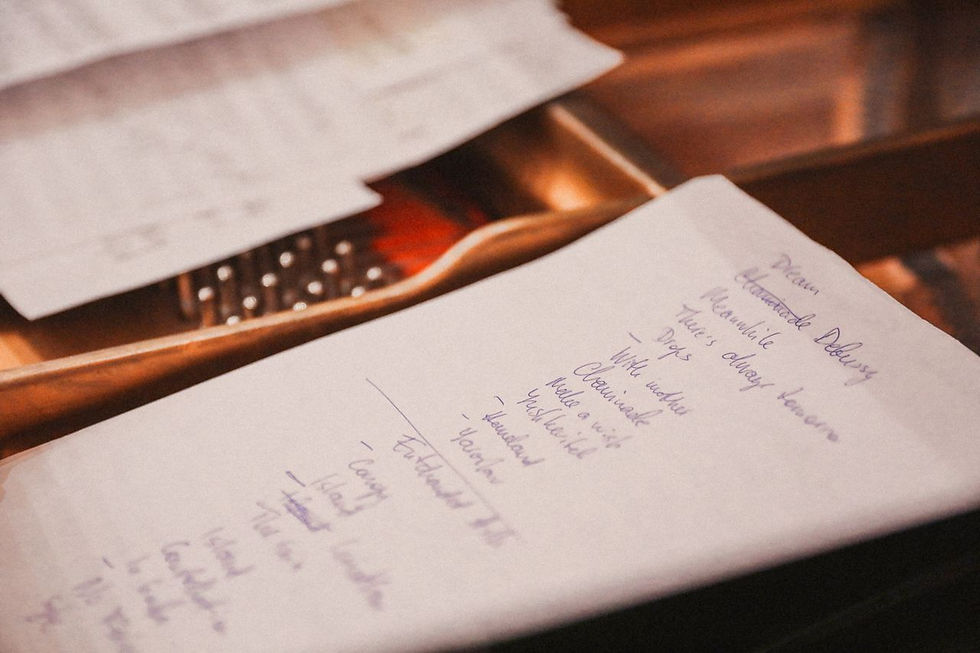
Yes, many wedding musicians are happy to discuss special song requests, particularly for important moments such as the ceremony.
However, the arrangements and number of requests will vary from one performer to another.
Ceremony requests
If there's a particular song you'd love to hear as you walk down the aisle, mention it early in your conversations.
Even if the song isn't part of the musician's regular repertoire, they may be able to prepare an arrangement specifically for your wedding.
Keep in mind that some songs translate more naturally to acoustic guitar and voice than others.
A heavily produced electronic track, for example, might need a completely different interpretation.
That isn't necessarily a disadvantage. Sometimes the result can be surprisingly beautiful.
Cocktail reception requests
For a cocktail reception, I generally recommend giving your musician some freedom.
You can share a few favourite artists, songs you particularly enjoy and perhaps some music you'd rather avoid.
That gives the performer a clear understanding of your tastes while allowing them to adapt the set to the atmosphere.
A completely fixed playlist can make that flexibility more difficult.
What about unusual song choices?
Don't be afraid to ask.
A rock anthem, an alternative song or something not traditionally associated with weddings might work very well in an acoustic arrangement.
What matters is whether the musician can create a version that suits both the song and the occasion.
One important distinction: requesting a song doesn't always mean requesting an exact reproduction of the original recording.
If you love a particular arrangement, make that clear. And if a specific song is essential to your ceremony, confirm that the musician can perform it before signing your agreement.
How Much Does Live Wedding Music Cost in France in 2027?

There is no single standard price for live wedding music in France. The cost depends on the performance format, duration, location, preparation and services included.
Rather than relying on a general average, it's more useful to understand what you're actually paying for.
What influences the price?
The number of musicians
A solo acoustic performance and a five-piece band involve very different staffing, equipment and logistical requirements.
The duration of the performance
A short ceremony performance isn't necessarily priced in the same way as a two-hour cocktail reception or a full evening of entertainment.
However, the fee isn't always proportional to the number of minutes played.
Even a short performance can involve travel, setup, soundcheck, preparation and several hours on site.
The location of your wedding
For a destination wedding in France, travel can be a significant factor.
A musician based near your venue may have fewer expenses than someone travelling across the country.
Depending on the distance, transport, accommodation and meals may need to be included.
The technical requirements
Sound equipment, microphones, battery-powered amplification, additional speakers or separate setups for different locations can influence the quotation.
Special preparation
Learning particular songs, creating new arrangements or coordinating a complex ceremony may require additional work.
How should you compare quotations?
Make sure you're comparing equivalent services.
One quotation might include travel, sound equipment and ceremony preparation, while another lists these separately.
Ask whether the price includes:
The agreed performance duration and number of musicians.
Sound equipment and any required microphones.
Travel and accommodation, where applicable.
Preparation of special song requests.
Setup, soundcheck and movement between performance areas.
Applicable taxes and any additional charges.
For international couples, it's particularly important to request a clear total price and confirm whether the quotation is inclusive or exclusive of VAT (TVA in France).
Where should you allocate your music budget?
If your budget doesn't allow for live music throughout the day, prioritise the moments that matter most to you.
For some couples, that's the ceremony. For others, it's the cocktail reception, when all their guests can enjoy the performance together.
A shorter, carefully planned live set can be more effective than spreading your budget across several performances that don't quite suit the occasion. For a closer look at what goes into a musician's fee, you can also read my article: Beyond the Price of Hiring a Wedding Musician.
What Should You Know About Hiring a Wedding Musician in France?
Planning a destination wedding brings a few additional considerations, especially when you're organizing everything from abroad.
The good news is that most of these are straightforward once you've discussed them with your musician and venue.
Check the venue's sound restrictions
Some French wedding venues have restrictions on amplified music, particularly outdoors or later in the evening.
This can be relevant for châteaux, countryside estates and properties close to residential areas.
Before booking, ask your venue whether there are specific rules concerning outdoor performances, sound levels or finishing times.
An acoustic performance with amplification may still be subject to these restrictions.
Consider electricity and outdoor locations
A beautiful garden or remote ceremony spot doesn't always have a convenient power supply.
If you're planning an outdoor ceremony, ask whether your musician can provide battery-powered amplification or whether electricity needs to be arranged.
Also consider the weather.
Even in Provence or on the French Riviera, an outdoor performance needs a practical alternative in case of rain or strong wind.
Musical instruments and electronic equipment must be protected from the elements.
Allow enough time between locations
Many French weddings involve several spaces within the same venue.
Your ceremony might take place in a garden, followed by a cocktail reception in a courtyard and dinner inside the château.
If the musician is performing in more than one location, they may need time to move equipment and carry out another soundcheck.
This should be considered when planning the schedule.
In some cases, using two separate sound systems can make the transition much easier.
Understand the booking arrangements
A professional musician should be able to provide clear written terms covering the performance, fee, payment schedule, cancellation conditions and practical responsibilities.
In France, professional musicians may work through different legal and administrative structures, including production companies or associations.
For international couples, the essential point is to understand who is contracting and invoicing the performance, and what the agreement includes.
You should also clarify who is responsible for any music licensing or declarations required for your event. Requirements can vary according to the event, venue and contractual arrangements.
If you're working with a wedding planner, they can often help coordinate these details with the venue and suppliers.
Communicate directly with your musician
A planner can be incredibly helpful, but I still recommend having at least one direct conversation with your musician.
It allows you to discuss your musical preferences, the atmosphere you're imagining and any personal requests.
You don't need to know the technical vocabulary.
Simply describing how you'd like your wedding to feel is often the best starting point.
What Should You Ask Your Wedding Musician Before Booking?

By the time you've listened to a musician's recordings and checked their availability, you'll probably have a good idea of whether you like their sound.
But a few practical questions can help you make a confident decision.
10 useful questions to ask:
Will you personally perform at our wedding? Particularly important when booking through an agency or a company representing several musicians.
Can we watch or listen to recordings of your live performances? Live recordings can give you a clearer impression of the performer's actual sound and style.
What exactly is included in your quotation? Confirm equipment, travel, duration and any additional charges.
Can we request specific songs? Ask how many requests are possible and whether preparation is included.
How do you adapt your repertoire to the atmosphere? This is especially relevant for cocktail receptions and dinners.
What do you need from our venue? Discuss space, electricity, shelter and sound restrictions.
How long do you need for setup and soundcheck? Make sure this fits the wedding schedule.
What happens if the ceremony or reception runs late? Clarify how timing changes and possible extensions are handled.
What happens if you're unexpectedly unable to perform? Ask about contingency arrangements and contractual protections.
How do we confirm the booking? Understand the agreement, deposit, payment dates and cancellation policy.
You don't necessarily need a formal meeting to cover every question.
A thoughtful email exchange or a short video call can be enough.
Trust what you hear, but also how you communicate
Technical ability matters, of course. So do experience and reliability.
But I think the relationship between a couple and their musician matters too.
You should feel comfortable explaining your ideas, asking questions and discussing the details that are important to you.
A good musician will listen, offer suggestions when appropriate and be transparent about what they can and cannot provide.
Your wedding music should feel like a natural part of your celebration, not something you have to manage constantly on the day.
A Final Thought: Music Is Part of the Atmosphere

When planning a wedding, it's easy to think of music as another item on the checklist.
Find a musician. Choose a few songs. Confirm the timings.
But music does much more than fill the silence.
It can welcome your guests before the ceremony begins. Give a familiar song a new meaning as you walk down the aisle. Bring warmth to a courtyard full of conversation. Or add just enough energy to a summer evening as everyone gathers for another glass of wine.
And sometimes, the most memorable musical moments are the simplest.
A voice. A guitar. A song that feels right.
My advice for couples planning their wedding in 2027 is to think less about how much music you need and more about what you want each moment to feel like.
The rest becomes much easier to plan.
Planning Your Wedding in France in 2027?
If you're planning a wedding in Provence, Paris, the French Riviera, the Loire Valley, Bordeaux, Normandy, Brittany or elsewhere in France, I'd be delighted to hear what you have in mind.
You can explore my live wedding music or get in touch to tell me a little about your plans.
Folk. Elegance. Emotion.
Every note you hear is played live.


